
From Escape to an Integrated Life
Unorthodox: The Scandalous Rejection of My Hasidic RootsAfter leaving with Yitzy, Devorah moves from the fantasy of becoming entirely ordinary toward a more durable freedom that includes, rather than erases, her Jewish history and earlier life.
increasing Bearing strength in each event
 decreasing
Bearing strength in each eventdecreasingLearning Life Outside

Finding Her Bearings
A world without familiar rules
After leaving, Devorah changes her contact information and tries to build a secure daily life with Yitzy. Simple choices that others take for granted are newly consequential because she has entered a world for which her former community did not prepare her.
She is often anxious that strangers can identify her background, even when she wears ordinary clothes. The wish to disappear into a crowd reflects years of feeling conspicuous and judged, but it also reveals how difficult it is to discard an identity on command.
Building trust with Yitzy
The move changes the relationship between mother and son. Without the constant presence of extended family and communal expectations, Devorah can respond to him more freely and take responsibility for his learning.
Teaching him English and sharing books gives their new life a practical foundation. Their closeness develops through everyday care rather than through a sudden transformation, helping Devorah experience motherhood as something she can define for herself.
Returning With Different Eyes
The Past in Perspective
Shame recedes
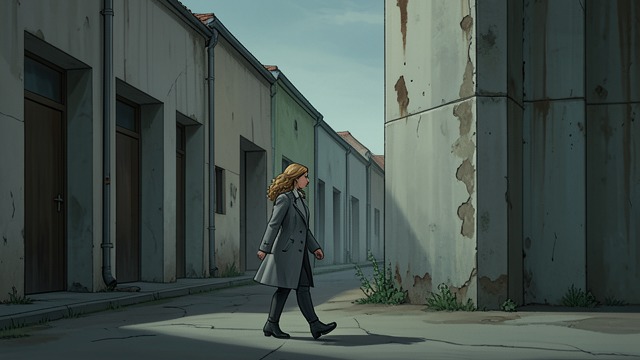
For a time, Devorah avoids Williamsburg and recoils when she sees the clothing associated with her former life. She also discovers that outsiders may describe Hasidic people in ways that touch her personally, even when they do not know her history.
The urge to hide gradually loses some of its force. Distance allows her to see that the life she left was not only a source of pain but also a distinctive history that shaped her perceptions and abilities.
An altered return
When Devorah eventually revisits the edges of her old neighborhood, the familiar landscape feels both strange and recognizable. The changes around her sharpen her awareness that both the place and she herself have moved on.
She can now look back without needing to either glorify or erase the past. That shift makes it possible to treat her history as part of her story rather than as a label that must determine her future.
A Memoir Gives Form to Departure

Turning Experience Into a Narrative
The abandoned identity as subject
Devorah commits to writing about the person and world she has left. Rather than treating her former self as someone to disown completely, she begins to make the experiences of that life the subject of a book.
Writing gives shape to events that had previously remained secret or confusing. The work also asks her to remember with precision, including the ways her own hopes and assumptions changed over time.
From private voice to publication
With support from literary contacts, Devorah develops a proposal and pursues publication. The project is demanding because her personal history becomes both an artistic undertaking and a public account of a closed community.
The memoir gives her a way to claim authorship over the story of her departure. It makes expression part of the freedom she sought, while preserving the complexity of the life that preceded it.
A First Independent Journey
Freedom Becomes Ordinary
Traveling by choice
In New Orleans, Devorah travels alone for the first time in a city where she does not have to organize her movements around her former community’s restrictions. The trip fulfills a childhood desire to move through the world without being told where she may go.
She seeks encounters with residents and local stories rather than limiting herself to familiar or approved experiences. The independence is meaningful not because every choice is dramatic, but because the decisions are hers to make.
A moment of recognition
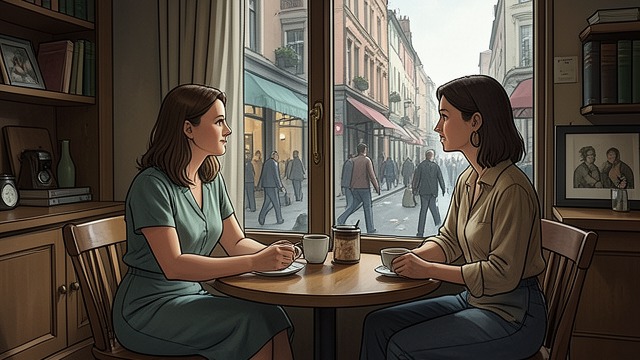
As she sits over coffee on her last morning, Devorah recognizes that the sense of possibility she had long awaited has arrived. Freedom feels less like a single escape than an open sequence of future journeys.
The scene confirms that she no longer has to treat travel, curiosity, and self-direction as impossible fantasies. Her life is not finished being difficult, but its possibilities are no longer bounded by the old rules.
Holding Past and Future Together

An Integrated Sense of Self
Beyond invisibility
Devorah admits that she still wants both anonymity and distinction. She once hoped that changing clothes and leaving the community would make her wholly ordinary, but she now sees that no outward transformation can erase the history that formed her.
Her new life contains contradictions: she is connected to her past while building a future outside it, and she can value Jewish identity without accepting every rule imposed in its name. The tension is no longer something she must solve by pretending one side does not exist.
Owning the decision
Devorah describes freedom as the power to make choices about her own life, relationships, and future. She does not claim that every sacrifice has been justified or that independence has removed every trace of trauma.
Instead, the ending rests on self-recognition. She can speak about who she was and decide who she will become, treating both the past and the future as parts of a life she now owns.
The first months after leaving
During her first year outside the community
After leaving, while developing the book proposal
About a year after leaving, during a trip to New Orleans
At the memoir’s close, one year after leaving
